Be yourself; Everyone else is already taken.
— Oscar Wilde.
This is the first post on my new blog. I’m just getting this new blog going, so stay tuned for more. Subscribe below to get notified when I post new updates.
Be yourself; Everyone else is already taken.
— Oscar Wilde.
This is the first post on my new blog. I’m just getting this new blog going, so stay tuned for more. Subscribe below to get notified when I post new updates.
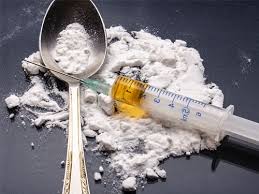
Whether or not drugs are criminalized in countries and municipalities, has a significant impact on communities, individuals, and more largely the healthcare system and prison system. Countries with two very different drug policies are Portugal and the United States. Portugal, in 2001, abolished all penalties for personal possession of drugs including, methamphetamine, marijuana, cocaine, and heroin (Greenwald, 2009). In contrast, the United States criminalizes personal possession for most illicit drugs, with the exception of marijuana in some states. Those states in the U.S. who decriminalized marijuana and Portugal both only allow small amounts to be possessed, but the distribution, sale, and transportation of drugs still remains illegal.
About 19 years ago Portugal decriminalized the possession of all drugs, including cocaine and heroin. They believe that addicts fear the possibility of prison, therefore it drives them underground. Because incarceration is so expensive, Portugal decided to provide addicts with health services instead of prison time. Now under the Portuguese government, individuals found guilty of possession of small amounts of drugs are sent to psychologists, social workers and legal advisors to seek appropriate treatment (Szalavitz, 2009). By sending them to health workers instead of prison it allows them to “exercise complete responsibility for what he does and what happens to him “(Becker, 1973). In other words, it allows the individual to take control over their life, and change for the better instead of going in and out of jail and or prison. This has dramatically changed social institutions such has the healthcare system and the penal system.
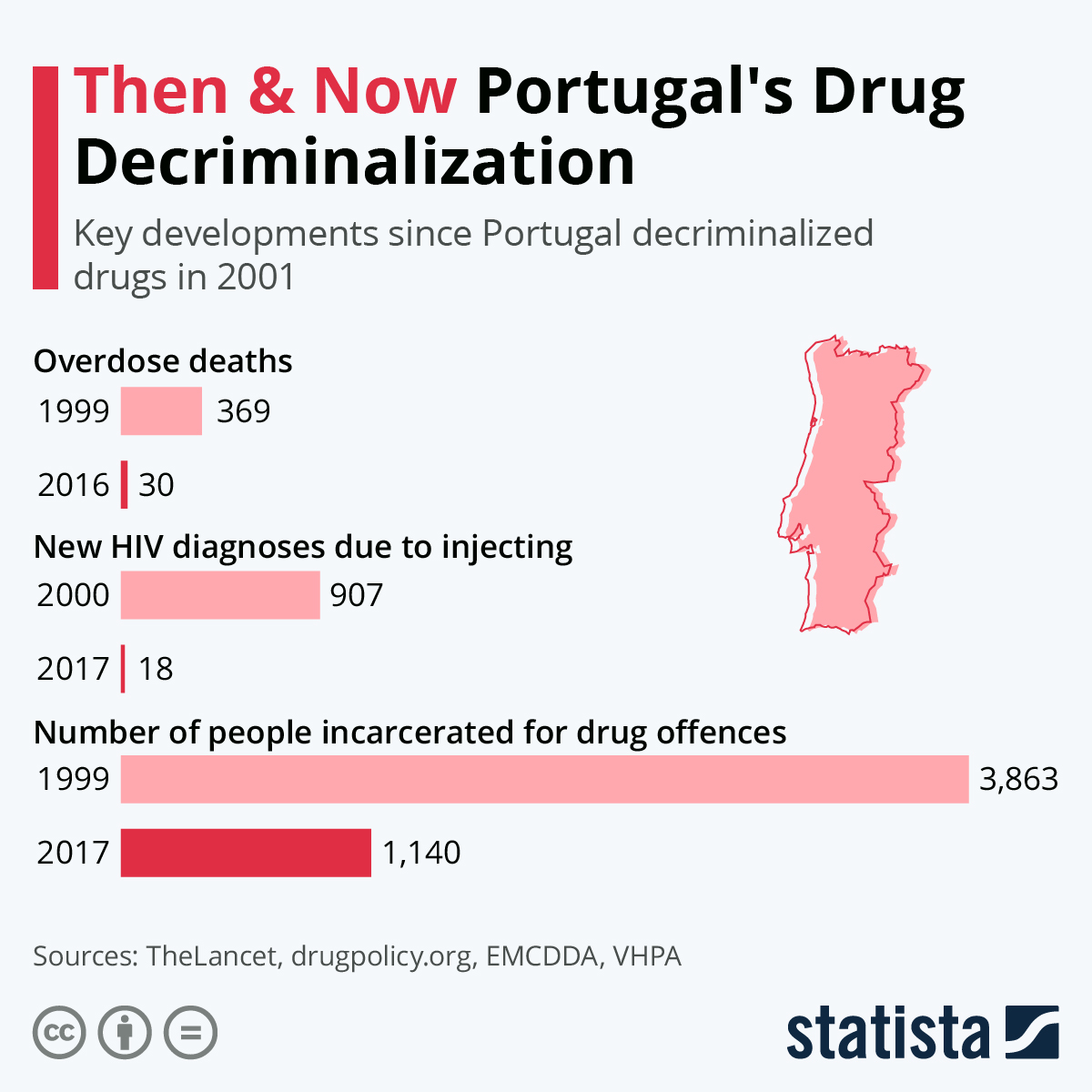
Since the decriminalization of drugs, drug-related HIV cases dropped 75 percent. In addition, in 2002, 49 percent of people with AIDs were addicts, but in 2008 the number dropped to only 28 percent (Szalavitz, 2009). Death by results of heroin in particular dropped by nearly more than half since the new regime. Although the cases of HIV caused by sharing dirty needles dropped, the number of people seeking help for their addiction doubled. The government was able to save a lot of money from the new enforcement and therefore was able to increase the funding for drug-free treatments (Szalavitz, 2009). This may be the case, but seeking help is much better than the alternatives, such as death and prison. For every million people in Portugal, only three people die as a result of overdose (Ingraham, 2015). This is dramatically different from other countries in Europe who report dozens, even hundreds, per million people dying of overdoses. The penal system has also significantly and positively been impacted by the new drug laws that were put in place over a decade ago. Between the years of 2000 and 2008, drug-related court cases dropped by 66 percent. All of the money that was once going towards the justice system has since been diverted to the public health service (Szalavitz, 2009). This has overall changed society in Portugal for the better.
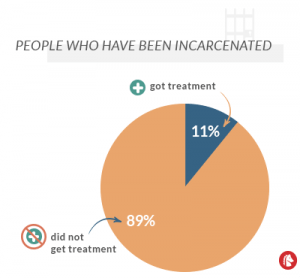
Illicit drug use remains illegal in the U.S. with the exception of some states in which decriminalized the possession of small amounts of marijuana. The numbers of people in prison as a result of drug possession and use are drastic. The United States only contains about 5 percent of the worlds population but 25 percent of their prisoners. Of all of the drug related arrests, narcotics compromise 12 to 28% of them (Thompson, 2017). Likewise, the U.S. has spends about $74 billion a year on criminal and court proceedings for drug offenders, compared to only $3.6 billion for drug treatment (Szalavitz, 2009). The United States should be more focused on treatment rather than sending addicts to prison. As of 2018, 15,000 people died of overdose due to heroin. This is at a rate of 5 deaths for every 100,000 Americans (Heroin Overdose Data, 2020). This is exceptionally higher than the rate of deaths as a result of overdose in the country of Portugal. If all illicit drugs, not just marijuana, were to be decriminalized, both the penal system and healthcare system would change, and probably for the better. Not only would the recidivism rate go down, but so would the death rate as well as the rate of HIV diagnosis.
Many countries have different laws and regulations pertaining to drugs. Above I looked at two countries, Portugal and the United States. Portugals drug policy is very lenient with the decriminalization of all drugs, including cocaine and heroin. They are more focused on helping addicted individuals and providing them treatment rather than throwing them in prison. The U.S, on the other hand, only decriminalized marijuana in some states, still obtaining their law against the legalization of other illicit drugs. They are more focused on putting drug offenders in prison rather than getting them the help that they need. They are slowly transitioning to more treatment opportunities and moving away from harsh sentences for drug users.
Becker, Howard S. Outsiders Studies in the Sociology of Deviance. 1973.
Greenwald, G. (2009). Drug Decriminalization in Portugal: Lessons for Creating Fair and Successful Drug Policies. SSRN Electronic Journal. doi: 10.2139/ssrn.1543991
Heroin Overdose Data. (2020, March 19). Retrieved from https://www.cdc.gov/drugoverdose/data/heroin.html
Ingraham, C. (2015, June 7). The EU country where drugs are decriminalised – and hardly anyone dies of an overdose. Retrieved from https://www.independent.co.uk/news/world/europe/portugal-decriminalised-drugs-14-years-ago-and-now-hardly-anyone-dies-from-overdosing-10301780.html
Szalavitz, M. (2009, April 26). Drugs in Portugal: Did Decriminalization Work? TIME.
Thompson, B. Y. (2017). “Good moral characters”: how drug felons are impacted under state marijuana legalization laws. Contemporary Justice Review, 20(2), 211–226. doi: 10.1080/10282580.2017.1307109
Christina had a long life of bouncing from foster home to foster home, 37 to be exact. She was trying to put herself through nursing school until she was told about a legal brothel in Nevada (Joseph, 2008).. She thought it was a dream come true. She would never have to worry about having enough money for food or a roof over her head ever again. At the brothel, men aren’t just looking for sex. Many of them go there looking for GFE: The Girlfriend Experience. This is where they pay anywhere from 10 minutes to 10 hours worth of cuddling, kissing and holding hands (Joseph, 2008). There they are also allowed to have their own rates and charge their costumers. This is significantly better and safer than going through pimps with illegal prostitution. It can be extremely dangerous and most girls are susceptible to rape, assault, robbery and even murder. Illegal street prostitution can also cause HIV rates to increase due to the practice of unsafe sex and drug use.
All over the United States, and the world, people use their bodies as a tool of trade. People are able to enter professions that are deemed unsafe and some that may even seem morally questionable. The one time that isn’t the case is when a woman is having sex as her profession (Wright, 2018). Why should it be any different for women in sex work? Why should women be exposed to stigmas and unsafe working conditions just because they want to use their body to make money. They should have a right to make their own decisions on what they want to do with their bodies, even if that means having sex or engaging in sexual activity for money. My argument is that sex work should be decriminalized and healthcare should be available for those in that profession. Not only would it create a safer environment for workers but there is also many economical advantages.
Sex work is an occupation, business, or trade involving sexual activity or other sexual services in exchange for economic compensation. It is found almost everywhere around the world, despite the varying legality from country to country. According the the article “Countries Where Prostitution Is Legal Population,” “There are an estimated 42 million prostitutes around the world” (Countries Where Prostitution Is Legal Population, 2020). Sex work can be anything from prostitution, pornography, escorting, stripping, and anything else that involves sexual services in exchange for payment. There are many issues that come with sex work, such as the stigma that surrounds it, the race differences, and the different health risks associated with it to name a few. These issues, especially the stigma, make it hard for big institutions like the government and medical services to deal with such laborers.
When talking about Thailand and the United States specifically, there are many differences in sex work. The big difference between the two countries is that it is partially legal in the United States, with the allowing of pornography, stripping, and in some counties of Nevada, prostitution. In Thailand, on the other hand, it is completely illegal, despite the prevalence of sex work in big cities, such as Bangkok and Phuket.
In Thailand there is two major levels of sex work. The low priced services are often provided by Burmese women who have migrated to Thailand. They usually serve both low-income Thai men and male Burmese migrants in underground brothel-like settings (Sex Work in Asia, 2001). The market for middle-income sex work has drastically changed due to the new legislature. Although it remains illegal, the result of the new laws moved the sex industry from direct prostitution, such as brothels, to indirect prostitution, such as karaoke bars and massage parlors. Of these two levels of the Sex Industry in Thailand there is estimated to be “between 150,000 and 200,000 sex workers” (Sex Work in Asia, 2001).

The sex industry in Thailand is very different from that in the United States. The United States has legal limits to sex work. Some forms of sex work that are legal are pornography, exotic dancing, webcam modeling, and phone sex. Forms that are illegal are street prostitution and indoor prostitution except for in some counties in Nevada (Countries Where Prostitution Is Legal Population, 2020). The clientele for sex work in the U.S varies significantly, with almost every class in society having access to pornography, exotic dancing, and phone sex. The upper-class society are more often associated with escort services as well as prostitution. Of all the underground commercial sex industry in the U.S researchers suggest that “33 percent identified as black, 17 percent as white, 11 percent as Latino, and 8 percent as multiracial” (Brown, 2014).
Despite the stigma that sex work is dangerous and shameful, most women in this type of work are doing it voluntarily. According to Jones, in her book Camming, “many sex workers have no desire to be saved. Many do not see themselves as victims” (Jones, 2020). In addition, she also states, ” 85% of prostitution is voluntary” (Jones, 2020). Because of this, I think most sex work should be legal in most places. Women have the right to do whatever they chose with their bodies and there shouldn’t be laws placed on it.
The three main institutions involved in sex work are the government, economic system and medical services. The government has a huge impact on sex work in countries. They solely determine if it is regulated, abolished, prohibited and/or tolerated. As mentioned before, in Thailand sex work is labeled as illegal and in the United States it is limitedly legal. The medical services also play a huge roll in sex work because of the dangers associated with it, such as STDs and HIV. Throughout the world, there are 40.3 million people living with HIV/AIDs, 17.5 million of those people are women, and 200,000 of those women are from Thailand (Ross et al., 2007). Due to the increase of awareness of high-risk results associated with commercial sex work and the improving rights for sex workers, the amount of HIV infections has substantially went down. From the year of 1991 to 2003, the number of new HIV infections decreased from 140,000 to 21,000 (Singh & Hart, 2007). In Thailand, to decrease the amount of infections, there was a condom promotion program put in place to limit the cases of HIV (Sex Work in Asia, 2001). This campaign consisted of providing free condoms to commercial sex establishments, sanctioning those establishments that didn’t use condoms consistently and creating a media campaign that advised men to wear condoms with sex workers (Singh & Hart, 2007). In Nevada, where prostitution is legal, participants are required to register with the local authorities and to submit to weekly tests for gonorrhea and chlamydia and monthly tests for syphilis and HIV (Alexander, 1998). This protects women and some men from new infections of HIV and if they contract it, they will be informed and given information on how to prevent it from spreading to others. If this was promoted all over the United States, there is a high chance that the countries rate of HIV infections will significantly decrease.
The economy in both countries tends to benefit from sex work. In the U.S the Global Strip Club Annual Revenue was 75 billion dollars, in 2006 the revenues from the porn industry was estimated to be 13.3 billion dollars, and in total in 2006 the sex industry reported 97 billion dollars in sales (Stats, 2020). Similarly, prostitution in Thailand brings in millions of dollars in revenue every year and has become integral part of Thailand’s image around the world (Singh & Hart, 2007). Between 1993 and 1995 profits from the Thai Sex Industry was three times higher than the drug trade industry (Sex Work in Asia, 2001). In both countries the sex industry generates a significant amount of money for their economies.

There are many organizations around the world that advocate and work to protect sex workers’ rights and their current issues. One advocacy group in the U.S. is the US Prostitutes Collective which works to decriminalize prostitution. This is one of many organizations that people can join to help protect sex workers’ rights in the United States. The organizations in Thailand are much more limited. One organization that is specific to Thailand is the Empower Foundation. They work to “oppose the criminalization, speak out about violence against sex workers, and oppose human right abuses (Mai, 2020).
Alexander, P., 1998. Sex Work and Health: A Question of Safety in the Workplace. JAMWA, 53(2).
Brown, E., 2020. 15 Facts About The Underground Sex Economy In America. [online] Reason.com. Available at: <https://reason.com/2014/03/14/economics-of-sex-work-in-american-cities/> [Accessed 18 April 2020].
Jones, A., n.d. Camming. New York: New York University Press.
Joseph, Elizabeth, (2008, April 15). Sex for Hire: Real Stories of Prostitution in America. Retrieved May 3, 2020, from https://abcnews.go.com/2020/story?id=4495721&page=1
Mai, C., 2020. Empower Foundation. [online] Global Network of Sex Work Projects. Available at: <https://www.nswp.org/members/asia-and-the-pacific/empower-foundation> [Accessed 18 April 2020].
Ross, R., Sawatphanit, W., Suwansujarid, T., & Draucker, C. B. (2007). Life Story of and Depression in an HIV-Positive Pregnant Thai Woman Who Was a Former Sex Worker: Case Study. Archives of Psychiatric Nursing, 21(1), 32–39. doi: 10.1016/j.apnu.2006.09.003
Treasures. 2020. Stats. [online] Available at: <http://iamatreasure.com/home/about/stats/> [Accessed 18 April 2020].
Singh, J., & Hart, S. A. (2007). Sex Workers and Cultural Policy: Mapping the Issues and Actors in Thailand. Review of Policy Research, 24(2), 155–173. doi: 10.1111/j.1541-1338.2007.00274.x
Wright, J., & Wright, J. (2018, April 26). Why Prostitution Should Be Legal. Retrieved from https://www.harpersbazaar.com/culture/politics/a20067359/why-prostitution-should-be-legal/
World Health Organization. Regional Office for the Western Pacific. (2001). Sex work in Asia, July 2001. Manila : WHO Regional Office for the Western Pacific.
Worldpopulationreview.com. 2020. Countries Where Prostitution Is Legal 2020. [online] Available at: <https://worldpopulationreview.com/countries/countries-where-prostitution-is-legal/> [Accessed 18 April 2020].
Much to popular belief, millions of people are affected by sexual violence every day, including both males and females. As of 1998, just under 3 million men have victims of attempted or completed rape. Right now 1 in 10 victims of rape are male and 1 in 6 men have been sexually assaulted or abused. This might even be an underrepresentation due to all of the men who are still in the dark and afraid to come out. According to McClean (2013), “41.6% of females who attended for a forensic medical examination returned to take part in counseling, whereas only 27.6% of males did so” (McClean 2013). This is because male victims tend to deny what happened to them was rape and they try to control their emotional responses. A main factor for this denial and lake of emotional response is because society has taught men to react in such a way, or in this sense, to no react at all.

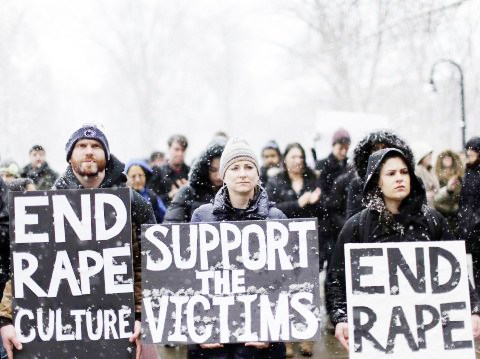
One of the social institutions with male sexual assault victims and how society perceives them is mass media. Not only does it help those who have survived sexual assault but it can also harm them because anything can be said on media. People use the mass media to express themselves both negatively and positively. For example, some use is to express their support to those who have bad experiences and to help them out emotionally. Others use it as a way of opening up about their negative experiences with sexual assault and as a way to cope. In contrast, some use it as a way to hurt those affected. For example, some use it to expose those affected, they use it express rape myths and blame the victim. The way in which mass media is used has a huge impact on those affected, whether it’s positive or negative. Another institution associated with male sexual assault survivors is the medical social institution. They are what provides men with the necessities after their trauma including counseling, testing, medication, and whatever medical needs they might require. The medical institution also plays a role in the social stigma attached the male sexual assault victims.
According to Goffman, a stigma is “an attribute that is deeply discrediting which has the effect of reducing the stigmatized person, in the eyes of others. From a whole and usual person to a tainted, discounted one” (Goffman, 1986). In other words, Goffman is saying that a stigma is a characteristic or attribute that is seen as a disgrace or undesirable in the eyes of the “norm.” One stigma that people still refuse to talk about, is the presence of male sexual assault victims. Although historically it has also been a taboo to talk about one’s experience with sexual assault, males especially, have been left out of the conversation. This is because the stigma surrounding male sexual assault survivors is so intense. They are believed by many to be able to defend off predators and if they can’t then they must have wanted it. People also believe only gay men can be sexually assaulted, and if you are assaulted then you must be gay. These misconceptions have led men to suffer silently in the dark, afraid to admit the horrific things that have happened to them. This stigma is so strong that it has made it so men are afraid to come forth. Society is to blame for how we socially constructed male sexual assault victims in society.
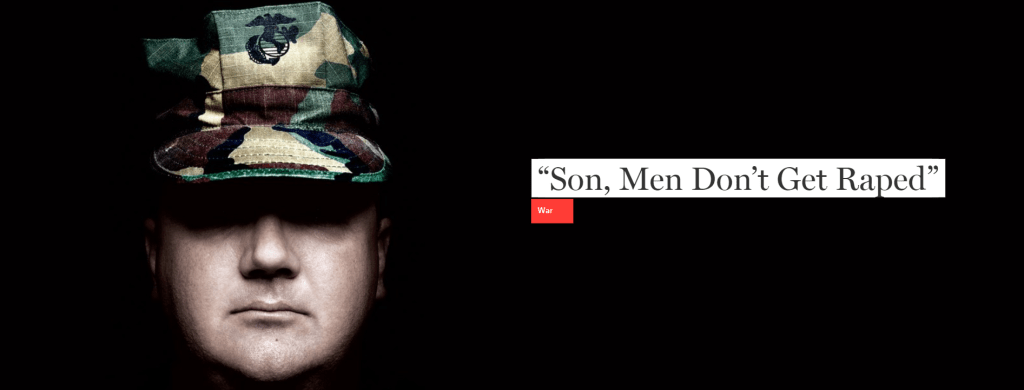
Finally there has been organizations built in order to help those boys and men who have experienced such emotional and physical trauma caused by their sexual assault or sexual abuse. Organizations such as 1in6 which was founded in 2007 in response to the lack of resources addressing the effects of the negative sexual experiences young boys and men have experienced. Their mission is to help men who have had unwanted sexual experiences to have a better life. They have many ways in which they help including a 24/7online helpline, online support groups, trainings and webinars, and male survivor stories.
The 1in6 nonprofit organizations helps many people worldwide. One story in particular is that of Aaron Stone, who was a 15 year old boy in high school at the time. He was methodically groomed and then raped by one of his male teachers. A couple of days later, the teacher had hand written him an apology note and Aaron immediately threw it away. When his mom found it in the trash, Aaron denied anything had happened to him because he was ashamed and what did happen to him was unclear. Years later when the cost of keeping the secret caught up with him, he decided to come clean about what had happened to him and report it to the authorities. The teacher had actually ended up in jail because little did Aaron know, his mother took the letter to the school and action immediately took place (1in6, 2020).
This is just one of the many survivor stories that can be accessed on the 1in6 website to help those who are need of assistance or need help in knowing what to do. These stories give hope to those who feel they have none; to those who feel there is no light at the end of the tunnel.
References
About Us. (n.d.). Retrieved from https://1in6.org/about-1in6/
Editorial Board, & Editorial Board. (2018, April 28). Male Sexual Assault Survivors in #MeToo. Retrieved from https://activisthistory.com/2018/01/12/male-sexual-assault-survivors-in-metoo/
Mclean, I. A. (2013). The male victim of sexual assault. Best Practice & Research Clinical Obstetrics & Gynaecology, 27(1), 39–46. doi: 10.1016/j.bpobgyn.2012.08.006
Goffman, Erving. Stigma: Notes on the Management of Spoiled Identity. A Touchstone Book, 1986.
Victims of Sexual Violence: Statistics. (n.d.). Retrieved from https://www.rainn.org/statistics/victims-sexual-violence

My name is Taylor Wadsworth and I am a junior at Siena College. I am a psychology major and a criminal justice minor with the hopes of becoming a defense attorney in the future. I want to become a defense attorney for several reasons. One reason is because I feel everyone is innocent until proven otherwise. I also feel that everyone should have a fair chance to prove their innocence no matter who they are or what background they come from. In addition, I believe that everyone should have a right to a fair trial not just those who can afford one. Eventually I wish to be able to contribute to the decrease in the number of those who are wrongfully convicted of a crime.
I grew up in the small city of Gloversville, NY where the population is estimated to be 15,158 according to the most recent census. Of those 15,158 people, an astounding amount of 93.28% are white. Before Gloversville was named Gloversville, it was actually called Stump City. The name was changed in 1853 when Gloversville’s glove industry boomed and it became the glove capitol of the world.
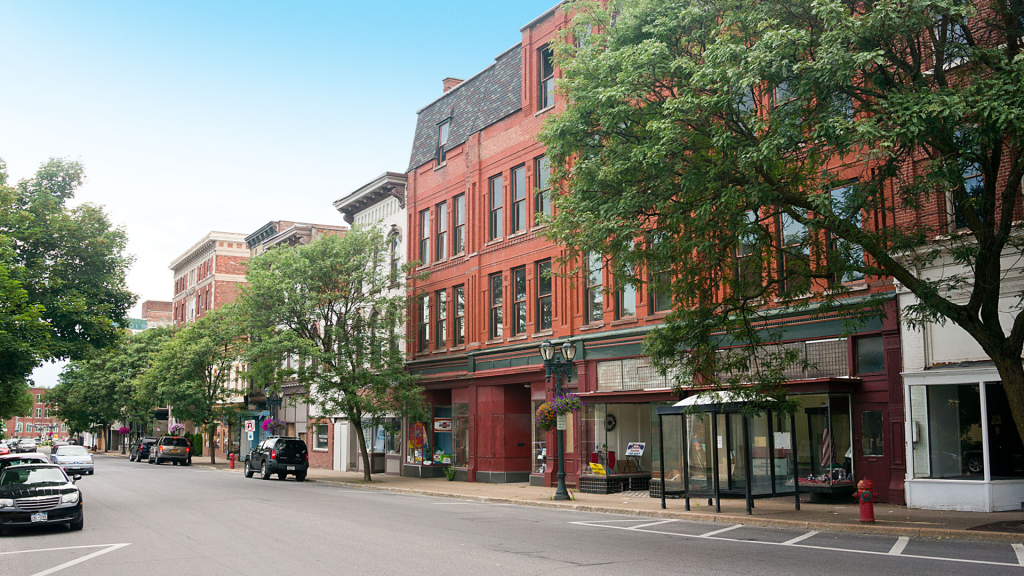
I went to Gloversville High school which has a population of about 852 students, 89.4% of them being white. More than half the students at my high school qualified for free lunch which meant that the school was primarily made up of students who come from lower-middle income families. My high school also has a shockingly low graduation rate of only 60%. Unlike many of my fellow classmates, my hard work and dedication allowed me to not only graduate, but also graduate in the top ten of my class and to get accepted into Siena College.

I am one in a family of four. There is my parents and then I have one sister who is three years older than I am. Growing up we were never close. We couldn’t even be in the same room for ten minutes without getting into a full blown argument. As we got older we both began to value the meaning of family and what it meant to be sister. Especially since she brought my nephew and pride and joy, Aidann into this world we have only gotten closer and for that I couldn’t be more thankful. Part of why my sister and I struggles to be so close when we were younger was because she suffers from Bipolar Disorder. She was prescribed medication in her early teens but often went on and off of them because of the way they often made her feel. Because she was often off her medication so often, her mood was never stable and she would frequently lash out on my parents and I. It came to a point where I didn’t even want to be around her, despite knowing that she couldn’t necessarily help it. I many times find myself blaming the healthcare system for putting her on medication so young instead of finding an alternative to help with her mental illness, such as cognitive-behavioral therapy. I think in todays society, the healthcare system has a huge influence on all of our lives. It comes to a point where we just listen and comply to what they say instead of questioning if that is what is right.

My great grandmother on my mothers side of the family actually immigrated here from Ireland in 1937 when she was 24. She settled in the small town of Northville, NY which has a population of only 1,099 according to the 2010 census. There she became an english teacher at Northville Central School and met the love of her life, a French undertaker who owned the funeral home in Northville. Both my mom and my dads sides of the family remained in Northville until my mom graduated from Russel Sage college and they moved to Gloversville where I have lived since.


My mom comes from a long line of college graduates, herself included. My father, on the other hand, does not. Not a single person in his family attended college, this includes both of his parents and his five siblings. I feel very thankful to be able to attend Siena and this is greatly due to my parents ability to finically put me through college. In many ways this makes me privileged. Not everyone is given such an opportunity to make something of themselves. It’s actually ironic because I had no intention of attending Siena at all. The only reason I applied was to make my uncle, who is the owner of Siena Fence Co., happy. He and his partner, a Siena graduate, named their company after Siena so I felt obligated to apply and turns out I ended up loving it and have been loving it ever since.
Deviance can be perceived and defined in several different ways. According to Howard Becker’s Outsiders, “deviance is the failure to obey the group rules” (Becker 8). In other words, Becker is saying that deviance is anything that departs from the norm of society. One deviant behavior that I feel I participate in is not conforming to the traditional ways of a woman. In history, and arguably in todays society, women were supposed to be accommodating and emotional, they were supposed to take care of children, cook and clean, they were expected to be teachers and nurses, and they were supposed to look feminine and act like a woman. Although I do have both the physical features of a woman and the personalities traits of most woman, I don’t believe in the way society portrays woman in society or the workforce. Ever since I was younger both my parents, especially my dad, have taught me to be independent and self-sufficient. This meant that I had to be able to do things like mow the lawn by myself, learn how to fix things around the house, learn how to pay a bill and make out a check, learn how to clean, and learn how to work hard for what I want. I was taught at a very young age that I can be whatever I wanted to be as long as I was happy whether it was an engineer or a police officer. Luckily I had parents who had also gone against societal views and enforced that into me at a young age.

One way in which I don’t conform to societal views of women is that I want to be a criminal defense attorney. Although women are continuously making their way into nontraditional occupations, such as law and medicine, men are still vastly overrepresented. Today, 1 in 3 lawyers are women. This is a very significant increase from 1960 when there was fewer than 1 in 25 women in law. In Outsiders, Becker states “Whether an act is deviant, then relates to how someone reacts to it…The point is that the response of other people has to be regarded as problematic” ( Becker 11-12). I think what Becker is saying, is that a deviant behavior isn’t necessarily deviant, it’s how people respond to it that makes it a problem. I think that is case with being a woman in law. The only real issue with it, is the issues men will make having a powerful woman in their work environment. According to Becker “The deviant is one to whom that label has successfully been applied; deviant behavior is behavior that people so label” (Becker 9). This means that the deviant behavior is being a woman and a defense attorney and because that’s what I want to be, I can be labeled as deviant.
Becker, Howard S. Outsiders Studies in the Sociology of Deviance. 1973.
This is an example post, originally published as part of Blogging University. Enroll in one of our ten programs, and start your blog right.
You’re going to publish a post today. Don’t worry about how your blog looks. Don’t worry if you haven’t given it a name yet, or you’re feeling overwhelmed. Just click the “New Post” button, and tell us why you’re here.
Why do this?
The post can be short or long, a personal intro to your life or a bloggy mission statement, a manifesto for the future or a simple outline of your the types of things you hope to publish.
To help you get started, here are a few questions:
You’re not locked into any of this; one of the wonderful things about blogs is how they constantly evolve as we learn, grow, and interact with one another — but it’s good to know where and why you started, and articulating your goals may just give you a few other post ideas.
Can’t think how to get started? Just write the first thing that pops into your head. Anne Lamott, author of a book on writing we love, says that you need to give yourself permission to write a “crappy first draft”. Anne makes a great point — just start writing, and worry about editing it later.
When you’re ready to publish, give your post three to five tags that describe your blog’s focus — writing, photography, fiction, parenting, food, cars, movies, sports, whatever. These tags will help others who care about your topics find you in the Reader. Make sure one of the tags is “zerotohero,” so other new bloggers can find you, too.

 The Life of Taylor Wadsworth